How to track mentions of your company in government meetings
Your company comes up in board and council meetings more than you think. How to track those mentions, sort them by type, and run the right play for each one.

Your company’s next sales opportunity may already be hiding in a board discussion. The useful part is knowing which mentions deserve action and how to reach the right person while the decision is still open.
TL;DR: How to track company mentions in government meetings
Monitor agendas, minutes, and recordings for mentions of your company, products, competitors, and relevant problems. Verify each mention, determine whether it signals a sales opportunity, customer feedback, or a contract decision, and assign an owner. Starbridge automates this research and alerts reps with meeting context and verified contacts, helping them respond through permitted channels before the next decision.
Why a meeting mention is the closest thing to an inbound lead
Buyers rarely know every option, so they consult vendors early to learn what’s possible, and the vendor who educates them shapes the evaluation criteria. Board discussions can flag plans well before a solicitation, but the lead time varies by buyer and project.
A buying signal is an early sign that a school district, university, or state or local agency plans to spend, like a new grant or a contract about to expire.
A direct company mention can be a strong signal, but its meaning depends on whether the buyer is evaluating a purchase, discussing a current contract, or raising a concern.
Those mentions show up in several records: agendas and packets, minutes and transcripts, and livestream video.
City councils, county commissions, and school and university boards post them on their websites, meeting portals, and YouTube channels, and clerk offices hold the rest.
Posting deadlines vary by jurisdiction and meeting type, and California’s Brown Act requires at least 72 hours for regular meetings.
Few GTM teams can check every portal that fast by hand, so many mentions get found after the meeting, if they’re found at all.
That’s one of the reasons we’ve built Starbridge.
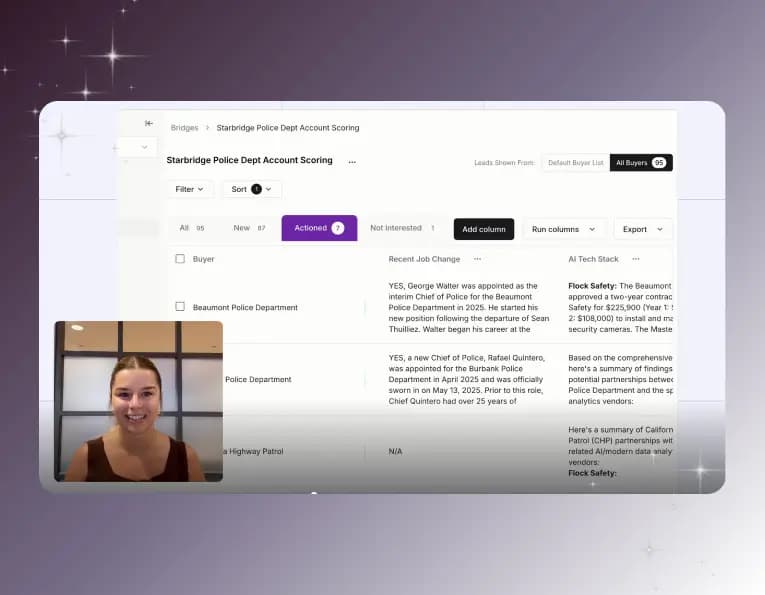
Starbridge is an AI GTM platform for teams selling to local government, K–12, and higher education, and our Buying Signals Monitor fixes this problem.
The Buying Signals Monitor reads the meeting video that general AI tools can’t scrape, including YouTube recordings of board meetings, town halls, and budget sessions across your entire TAM.
For InquirED, moving off manual board-document research and onto signal-driven scoring led to $200K in new pipeline in its first quarter. Book a demo today to learn more.
Which government meeting mentions matter and how to respond
Not every mention of your company, product, or competitors means the same thing.
A buyer might be evaluating your product, comparing vendors, discussing customer feedback, or approving a contract. Each situation calls for a different response, and some require action before the next meeting.
A buyer considering your product
Picture this illustrative school board agenda item: “Item 7.3: Discussion of classroom management software for 2027–28.”
During the discussion, the district’s IT director names your product as one option under review. Two other vendors come up in the same five minutes.
That mention points to active evaluation.
The right play is timely outreach through permitted channels, with a reference to the exact discussion. Confirm any procurement contact restrictions before approaching the person who raised the item.
An email that cites “Item 7.3” by number gives the IT director a clear reason to reply.
Ask which criteria the board raised and offer a short demo before the next meeting. The goal is to answer questions while the district is still forming its shortlist.
Treat the IT lead as a buyer. IT is often the decision-maker in school districts, universities, and local agencies, so a mention from an IT director deserves the same urgency as one from a superintendent or city manager.
A customer praising or complaining
Customers discuss vendors in meetings too, and whether the mention is good or bad determines who on your team responds and how fast.
- When a customer praises you. Say a superintendent updates the board on the attendance platform rollout and mentions that teachers adopted your product within the first month. That’s a ready-made reference and an opening to expand. The account owner should thank the superintendent by name, ask for a reference call, and ask which other departments face the same problem.
- When a customer complains. Suppose a resident uses the public comment period to point out that support tickets on the city’s permitting portal, which runs on your product, have gone unanswered for two weeks. That’s a renewal risk on the public record. Customer success should reach the account within a day and deliver a plan to improve on the dissatisfaction before the next meeting.
A comparison with a competitor
Consider this illustrative committee item: “Item 9.2: Review of assessment platform options for 2027–28.”
This means, staff compares your product with the incumbent on rostering, training time, and annual cost.
The comparison in the committee item can help reveal the evaluation criteria buyers care about.
Reps should answer the exact concern raised in the meeting. For example, if the committee worried about training time, proactively send the onboarding timeline from a similar district.
The difficult part about comparisons is reaching out on time.
Comparison discussions are buried in committee minutes that reps rarely have time to open, and the window closes once the committee makes a recommendation.
Pulling those discussions takes seconds with Ask Starbridge, and reps don’t even need to leave Slack.
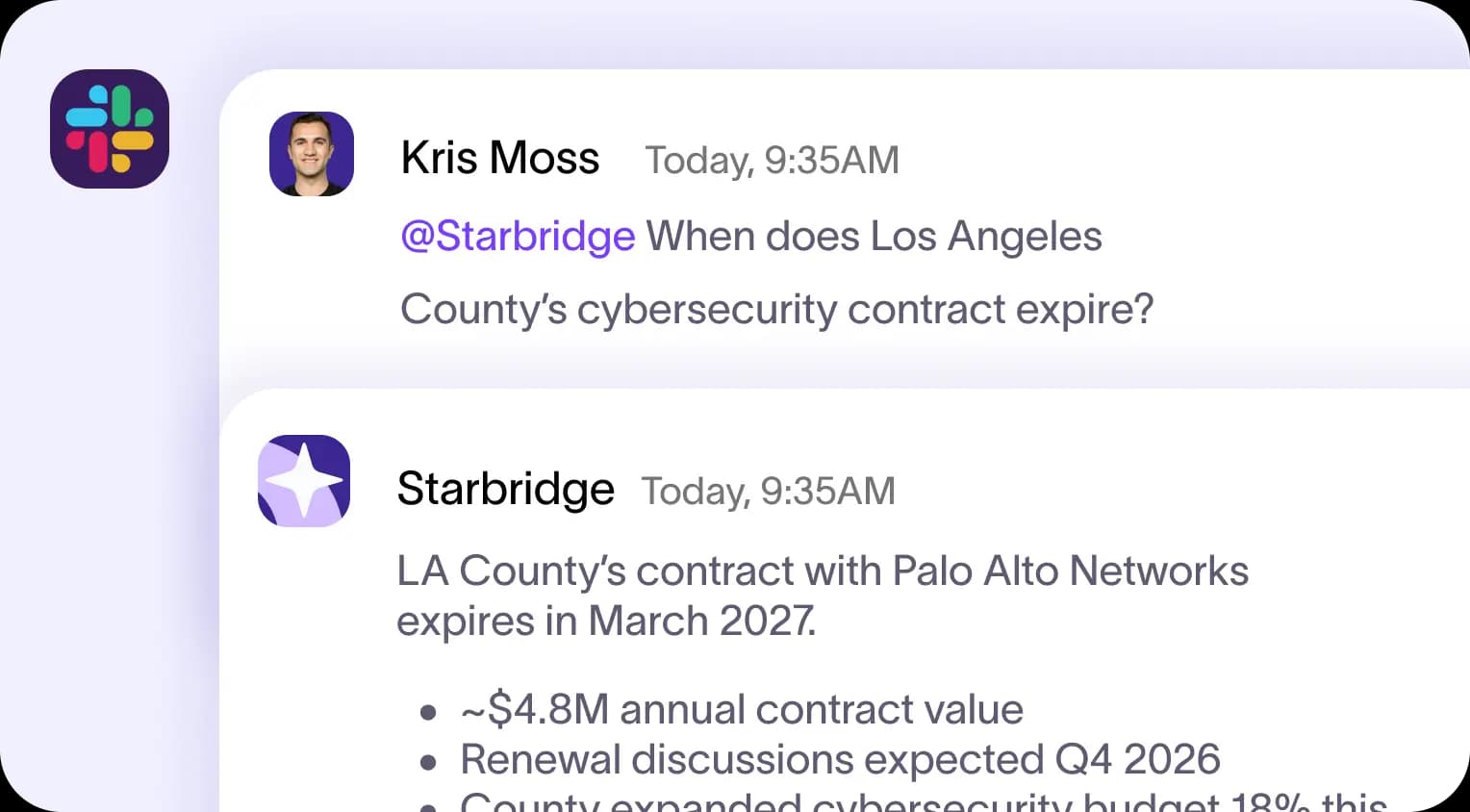
Zencity reps use Ask Starbridge Chat to pull city priorities from recent council meetings before discovery calls, and Zencity sources 50% of its cold meetings from Starbridge.
A contract approval or budget item in your category
Contract approvals often land on the consent agenda, where items pass without discussion.
One item may read: “Item 5.6: Approve a three-year agreement for visitor management software.” A budget example might show a new line in the proposed budget for cybersecurity awareness training.
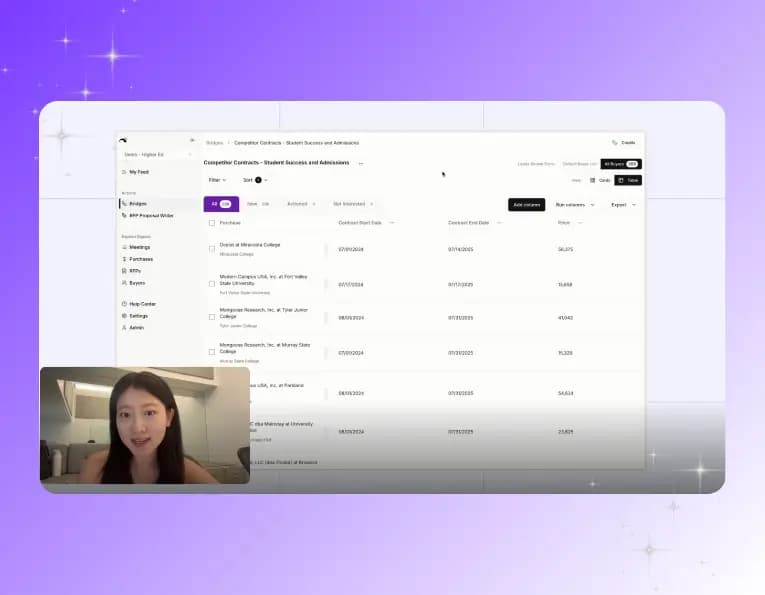
Renewals may require board or council approval under the buyer’s rules, and agenda packets may list the vendor and contract value. A competitor’s approval points to contract terms and renewal options to verify, which turns the item into a map of expiring government contracts in your category.
Use 9 to 12 months before a verified renewal decision as a planning window, adjusting for procurement lead times and notice deadlines. Add the account to a renewal watchlist and build the relationship while the incumbent is still in place.
A proposed budget line signals clear buying intent.
Confirm adoption, available funds, and any spending conditions before treating it as purchase funding. The right play is outreach before the solicitation appears, while the department is still defining what it needs.
How to track mentions of your company in government meetings
Here’s the exact, step-by-step process:
1. Build a territory map of the accounts you sell to
Start with the TAM, defined by entity type and region. Entity types include cities, counties, and school districts.
Split the TAM into territories so every mention has a natural owner the moment it surfaces.
The problem? Tracking every committee and smaller jurisdiction means bookmarking hundreds of sites. Each site posts on a different schedule, and many bury minutes three clicks deep in a document archive.
Starbridge solves the coverage problem at the source: its meetings data comes from government and education websites, YouTube channels, and third-party minutes sites, collected and refreshed every week.
2. A keyword list that goes beyond your company name
Start with your own names and widen the keyword list from there:
- Your company name and every product name buyers might say out loud
- Competitor names, including the incumbents in your target accounts
- Category terms, such as “classroom management software” or “visitor management”
- Problem terms, such as “chronic absenteeism” for student mental health software or “officer safety” for patrol car technology
The first two groups catch accounts already talking about you or your competitors.
The later problem terms do the heavier lifting, because they catch accounts that need your product before they know your name.
For example, a district discussing chronic absenteeism may have a need that a student mental health product can help address, depending on the causes, so the list reaches well past existing customers and current pipeline.
Exact-match keywords still miss meetings where buyers describe a problem in different words.
Starbridge uses semantic search (search by meaning), so accounts surface thanks to plain-language descriptions of the signals you care about rather than a fixed keyword list.
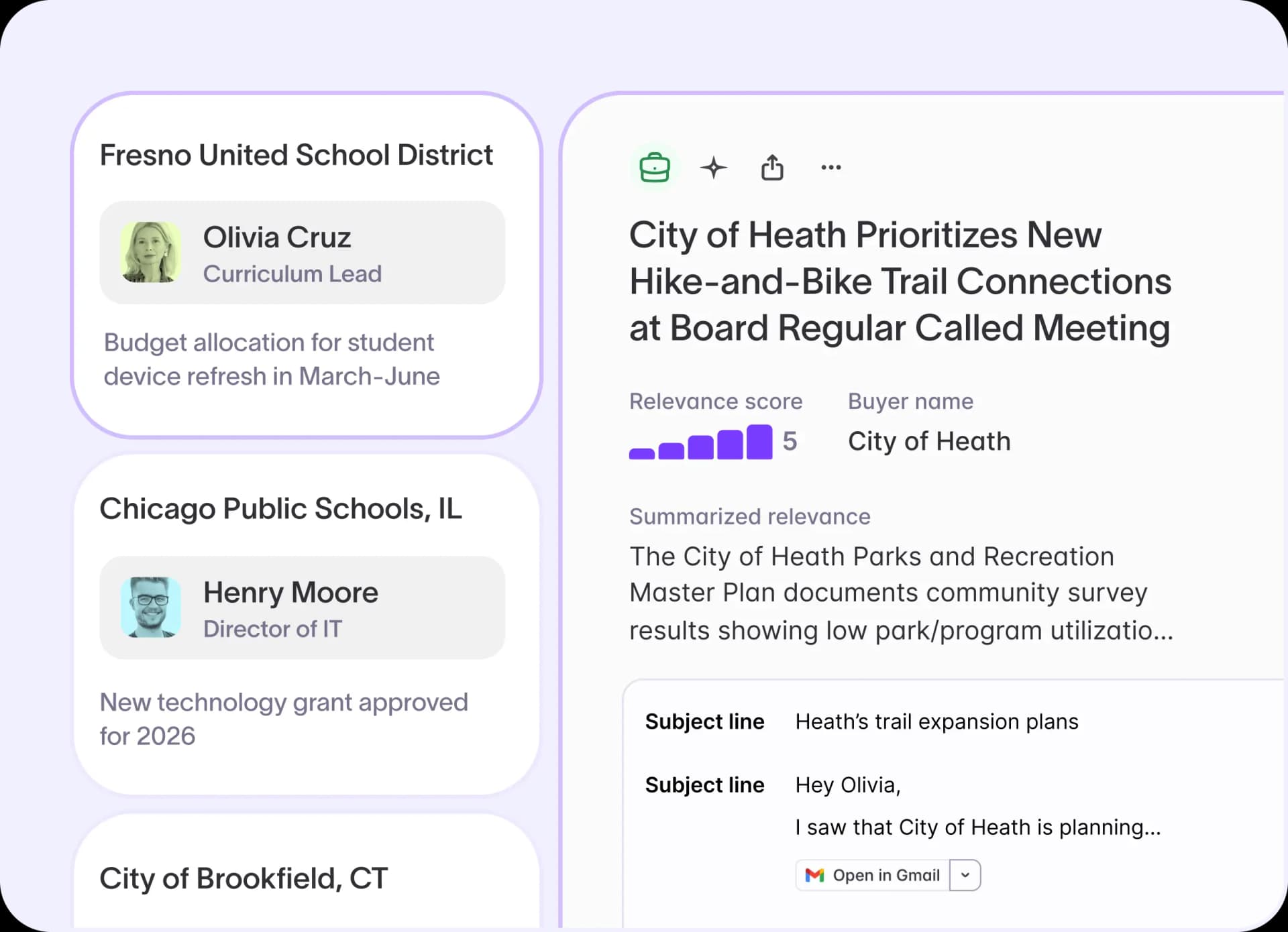
Every match comes with a relevance score and a plain-language explanation of why it matched.
3. Alerts with low noise and every mention in context
Alerts should fire only on meaningful matches. A rep who gets 40 hits for the word “software” will stop reading alerts a few days later.
Each alert should show the mention in context, ideally with the transcript phrase, agenda item, and recording link or clip when available.
We recommend verifying names and wording against the source because automated transcripts can contain errors.
Reps should also be able to jump between mentions in a single meeting and filter by meeting date, entity type, and territory.
Context and speed matter because the next meeting can turn a discussion into a vote. The Buying Signals Monitor sends territory-based alerts that explain why the timing is right, and priority accounts route to the right rep.
GovWell set up territory-based alerts within days of onboarding, so sellers get high-intent signals straight to their inbox. In its first week, GovWell booked five meetings, and it now sources 15% of its qualified pipeline from Starbridge. Book a demo today to learn more.
4. Owners and a review cadence for every territory
Assign each territory an owner and a fixed review cadence.
- Daily works for high-priority accounts.
- Weekly works for lower priority accounts, as long as no mention sits unread past the next meeting date.
Starbridge’s AI agents help reps take on that review load by monitoring buying signals 24/7, surfacing the right contacts, and scoring accounts so reps start with the meetings that matter.
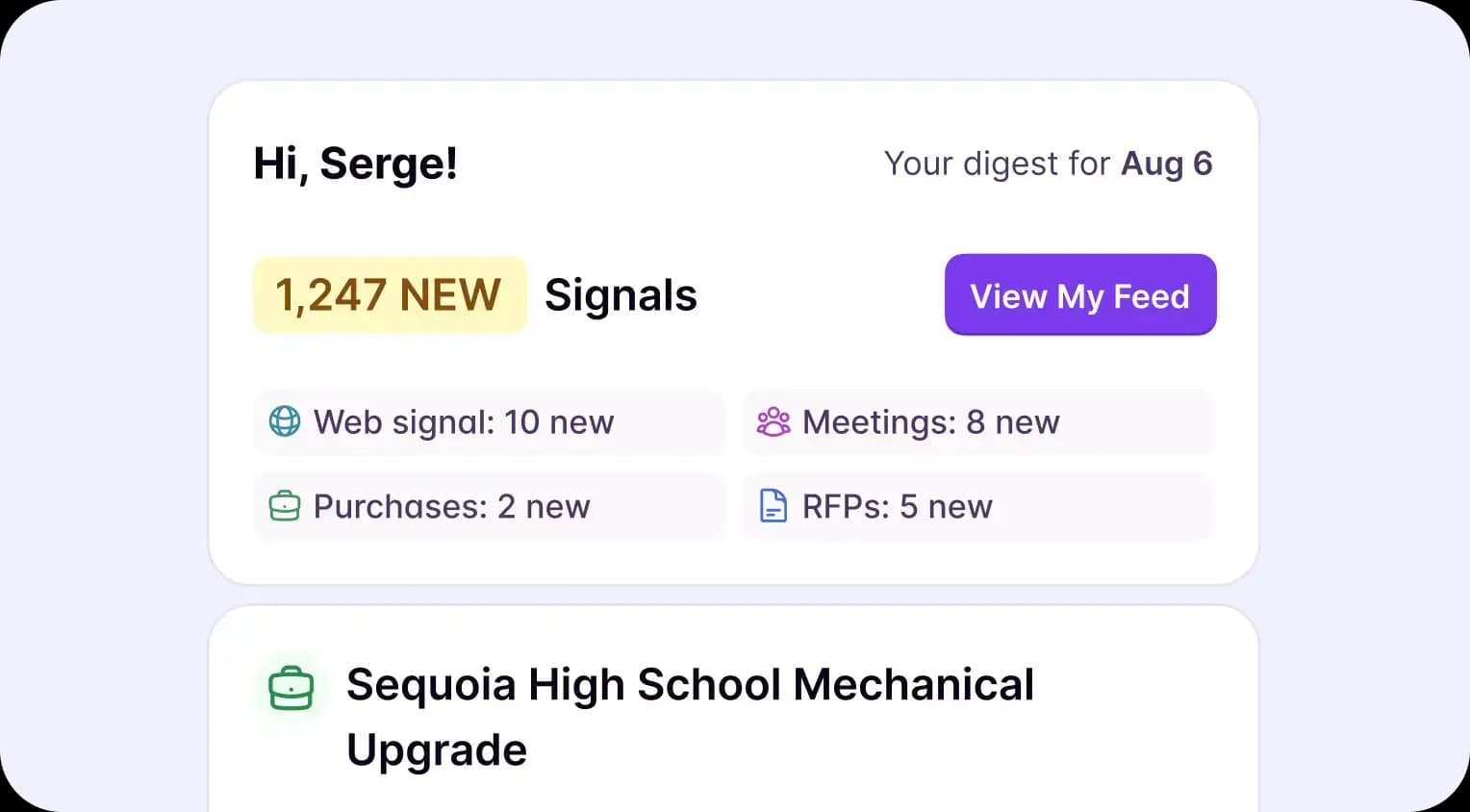
Frontline Education cut research time by 90% with Starbridge. Research that took 20 to 30 minutes per account is now instant, so Frontline reps walk into meetings already knowing account priorities, competitive context, and spend history.
Turn government meeting mentions into sales opportunities
A school board comparing vendors, a city council discussing new funding, or a customer raising concerns about your product can all reveal opportunities to act. The challenge is finding those discussions early enough to respond, especially when they’re buried in meeting minutes, lengthy PDFs, or hours of video.
That’s what Starbridge was built for.
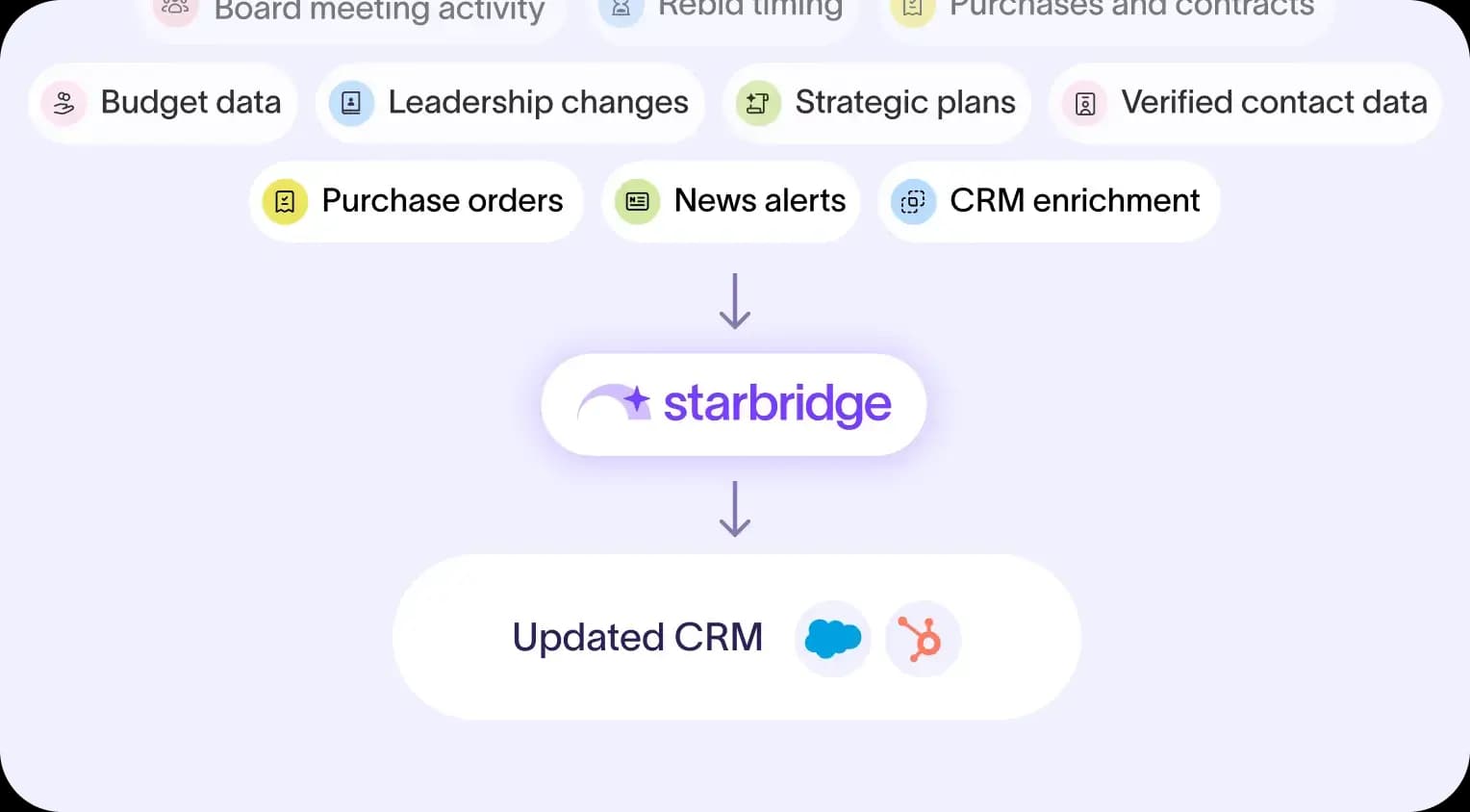
Starbridge is the AI GTM platform built on the most comprehensive dataset of government and education buyers and buying signals. Its Buying Signals Monitor tracks meetings across local government, K–12, and higher education, identifies relevant discussions, and alerts the right rep with the meeting context and verified contact information.
Instead of manually searching through public records, your team can focus on what matters: reaching buyers during evaluations, responding to customer feedback, and identifying purchasing opportunities before the competition.
Book a demo to see how Starbridge turns government meeting mentions into timely outreach and new pipeline.
Frequently asked questions
Generally, records of open meetings of public bodies are accessible under applicable law. Closed-session records, exempt information, and private institutions may be treated differently, and not every meeting is recorded. Many boards post them on their own websites, meeting portals, or YouTube channels, and clerk offices can provide records that aren’t online.
Notice periods vary by state and meeting type. California’s Brown Act requires regular-meeting agendas at least 72 hours ahead, while Texas generally requires at least three business days. That short window is why reps need alerts rather than manual checks.
Track your company and product names first, then competitor names. Add category and problem terms, such as “chronic absenteeism” for student mental health software or “officer safety” for patrol car technology. Problem terms catch accounts that need your product before they know your name.
Capabilities vary. Some tools can process imported recordings or connected meeting sources, but transcription alone does not guarantee automatic discovery of government livestreams. Check source coverage, collection methods, and transcript search features. Purpose-built meeting intelligence can automate that workflow for the entities it covers.
Policy and legislative trackers primarily serve government affairs teams and may cover bills, regulations, and local meetings. A GTM buying signal platform routes company mentions, competitor comparisons, and budget items to sellers with verified contacts attached. The platform also syncs each mention to the CRM so reps can act on it.