Capture management for government and education deals
Federal capture is too heavy for local government, K–12, and higher education deals. Here’s a lighter capture process built on buying signals and four questions.

The most useful work on a government or education deal can happen before an RFP appears. Capture management helps sales teams use that head start to improve their chances of winning the contract.
Four questions can turn an early buying signal into a focused capture plan and reveal whether the opportunity deserves your team’s time.
TL;DR: What is capture management for government and education?
Capture management is the work of qualifying and positioning for a contract before and during procurement. It identifies funded need, maps decision-makers, checks the incumbent contract and renewal date, and confirms the purchasing path. Track those findings in a one-page plan, update it as buying signals change, and use it to prioritize outreach and proposal effort.
What capture management looks like for government and education deals
Capture management is the work that begins before a solicitation and continues through procurement to raise the odds of winning a contract. Federal teams track those odds as probability of win, or PWin, using sources such as SAM.gov and the applicable federal acquisition rules.
Local government, K–12, and higher education spread spending across hundreds of thousands of fragmented entities, so capture looks different here:
| Federal | Local government and education | |
|---|---|---|
| Who owns capture | A dedicated capture manager | Usually the account executive |
| Pursuit length | Often years | Varies by buyer and purchase |
| Deal size and volume | Fewer, larger pursuits | More, smaller deals |
| Final decision | Contracting officer or designated source selection authority | Authorized procurement official, with board or council approval when required |
| Ways that go beyond a new, full bid | Simplified procedures, contract vehicles, and authorized exceptions | Small-purchase procedures, authorized sole-source awards, and cooperative contracts |
Local procurement mechanics set the rules. Board approvals and fiscal-year budget cycles set the timing, while purchasing thresholds and cooperative contracts set the path.
The payoff for learning them is higher win rates and lower pursuit risk, because reps stop chasing RFPs written for someone else.
Capture starts at the board meeting
Public sector buyers rarely know every option in a category, so they consult vendors early to learn what’s possible.
The vendor who educates the buyer often shapes the evaluation criteria, months before an RFP exists. Board meetings and budget documents mark the true starting line for capture in this market, and almost all of that record is public.
Pre-RFP buying signals and what each one should trigger
A buying signal is an early sign that a school district, university, or state or local agency is planning to spend. Buying signals surface before an RFP ever appears, and each one calls for a different capture action.
The table below maps six common buying signals to the capture play each one should start.
| Buying signal | Where it appears | Typical lead time before an RFP | Capture action it triggers |
|---|---|---|---|
| Board meeting discussions | Board and council agendas, minutes, and recordings | 12 to 18 months | Share educational content tied to the stated problem |
| Strategic plans | District, city, and university planning documents | 12 to 18 months | Align messaging to the named priority and its deadline |
| Budget line items | Draft and adopted budgets | 6 to 12 months | Confirm the funded amount and book discovery |
| Grant awards | State and federal grant announcements and board approvals | Set by the grant’s spending deadline | Pitch a use case that fits the grant’s terms |
| Leadership changes | Board appointments, press releases, and job postings | A new leader’s first 60 to 90 days | Send a new leader something useful for the role, and follow a departing champion |
| Contract expirations | Contracts, purchase orders, and board renewals | 9 to 12 months | Start relationship building and displacement messaging |
Treat contract expirations as a 9- to 12-month pipeline planning window, adjusting for the buyer’s procurement timeline and any earlier notice deadlines.
Leadership changes are two separate plays. Reach a new director or department head inside the 60- to 90-day window. When a known champion leaves, flag both the new account and the one left behind.
Many state, local, and K–12 fiscal years end June 30, which makes budget planning the preceding winter a prime capture window.
Monitoring thousands of entities without manual research
Buying signals sit on local government, school district, and university websites. Much of the intent lives in board packet PDFs and YouTube recordings of board meetings, which general AI tools may not retrieve or interpret consistently.
Hunting through board packets by hand can take hours per account, so manual tracking breaks down long before a rep covers a full territory.
That’s one of the reasons we’ve built Starbridge.
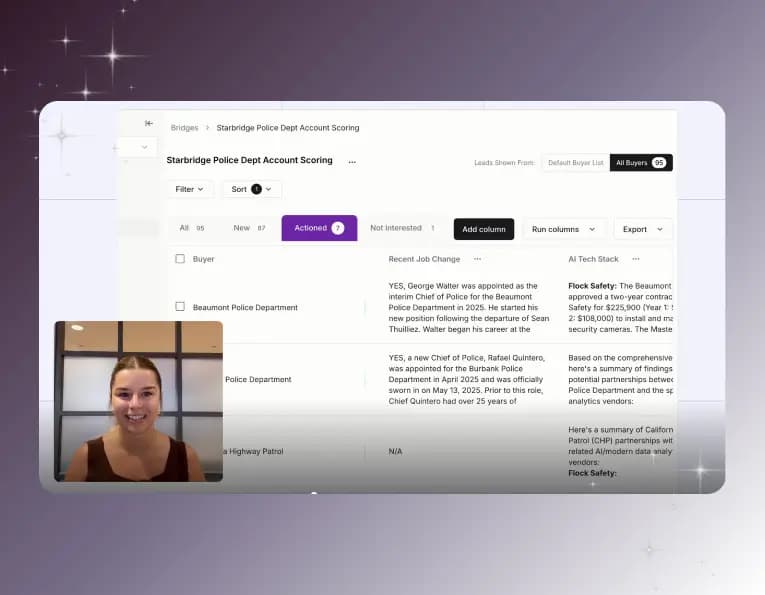
Starbridge is the AI GTM platform for teams selling to local government, K–12, and higher education. Its Buying Signal Monitor watches 320k+ entities 24/7, transcribes meeting recordings, and sends territory-based alerts.
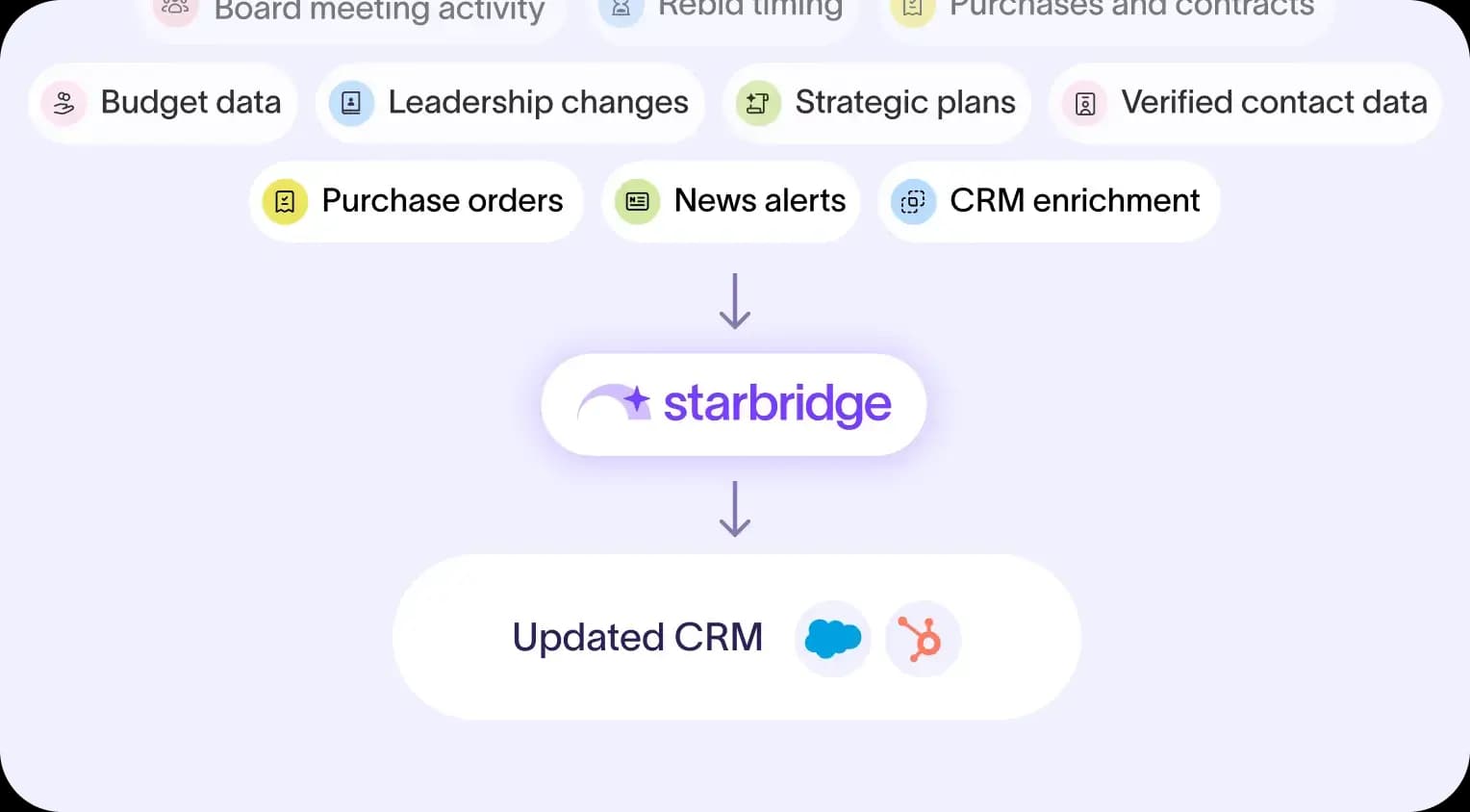
Each daily digest pairs a buying signal with a verified contact and the context a rep needs for outreach.
GovWell now sources 15% of its total qualified pipeline from Starbridge, a repeatable intent-based outbound channel. Book a demo today to learn more.
Four questions that qualify every pursuit
Federal teams score pursuits with PWin models built for multi-year pursuits. Capture management for government and education needs a lighter bid/no-bid scorecard, one a rep can fill in before the first call.
The four questions below form that scorecard, and each one needs an answer before the team commits proposal hours.
1. Is there a funded need?
Confirming need takes two checks: a use case and a budget.
Strategic plans and meeting minutes show whether the account names your problem as a priority, and budget line items show whether money is attached.
The illustrative scoring framework below turns those checks, plus the competitive picture, into a priority level.
| Priority level | Use case and pain | Budget and capacity | Competitive buying signals |
|---|---|---|---|
| High (9–10) | Strategic plan or meeting minutes name your category as a top priority for the fiscal year | Approved budget shows a relevant line item. Hiring signals capacity but does not confirm purchase funding. | Incumbent contract expires in under 12 months, or public pain with the current vendor is documented |
| Medium (5–8) | High-level goals suggest a need, but no project is named | Large operating budget, but no line item for your solution | Competitor is present, but the contract is not expiring soon |
| Low (1–4) | No evidence of your use case in recent transcripts or plans | Budget freezes, layoffs, or cost-cutting mandates in recent news | Competitor just signed a 5-year deal |
Fresh money tied to a named problem outranks raw budget size. Take a student mental health product. A district with rising absenteeism and a new school safety grant that covers the proposed use scores above a larger district with no new funding.
Need without budget is a nurture account, and budget without need is a guess. Score both before anyone drafts a proposal.
2. Who decides?
Most public sector deals involve several buying roles.
The end user judges workflow fit, and the economic buyer judges ROI. IT often holds decision-making authority in this market, so security and integration answers belong in the first conversation. Procurement and any board required to approve the contract round out the list, even if they never sit through a demo.
Reaching all these roles requires accurate contacts, and LinkedIn-scraped data often misses much of this market because many government and education buyers don’t keep current profiles. Bad records waste rep time, drag down deliverability, and weaken sequence performance.
Starbridge’s Contacts & Company Data sources contacts from official .gov and .edu sites using proprietary web-agent technology.
It delivered 98% email accuracy and a 2% bounce rate across a 14,000-email test, while bounce rates for tools like ZoomInfo often run 25%.
TAM to Target reports that Starbridge contact data is 3 to 4 times more valid than any other contact vendor’s it has worked with. Book a demo today to learn more.
3. Who is the incumbent, and when does the contract end?
The incumbent, current spend, and contract end date decide when to reach out and how to position your product or service.
For example, a rep who knows a competitor’s contract ends next June can build a relationship this fall.
Finding those facts by hand means public records requests, purchase orders, and board agenda packets, and the records requests alone can take weeks per account.
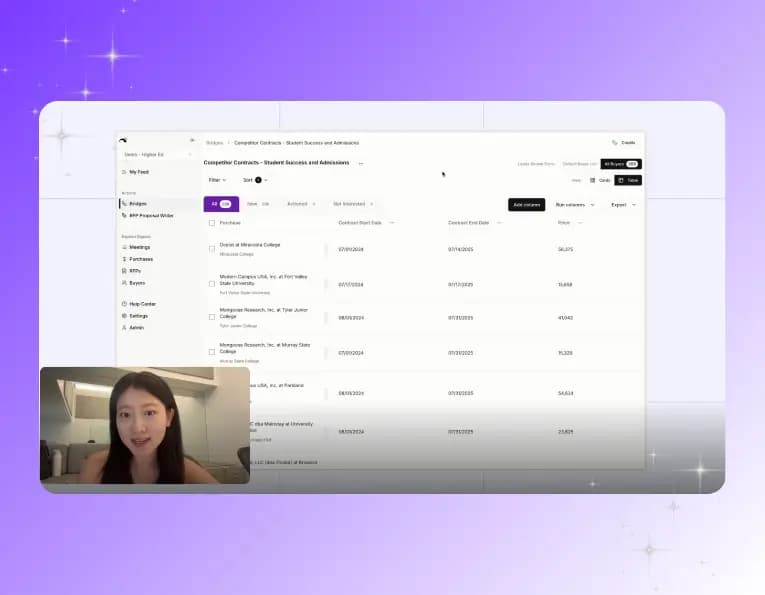
Starbridge’s Public Spend Intelligence gives reps that context instantly. It surfaces full competitor contracts with pricing, opt-out clauses, and expiration dates, and it has purchase order data for 77% of local government, K–12, and higher education institutions out of the box.
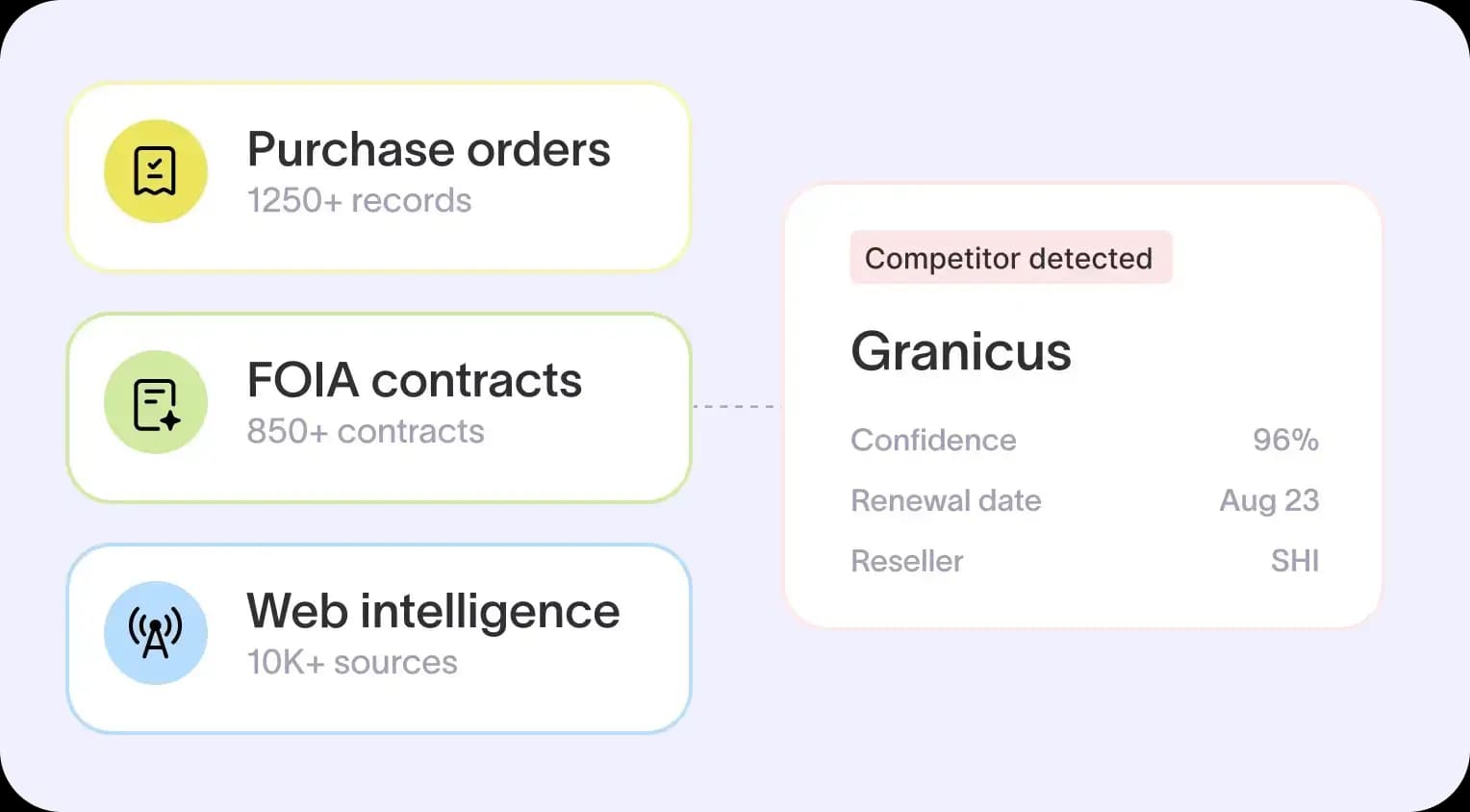
Reps at Frontline Education cut account research time by 90% with Public Spend Intelligence, so discovery calls now start with the buyer’s problem.
4. Which procurement path will the buyer use?
One of procurement’s biggest decisions is whether the deal needs a new, full RFP.
Purchases above the buyer’s competitive purchasing threshold generally require competition unless an authorized exception or cooperative purchasing route applies. Sole-source awards require a separate justification.
Thresholds typically range from $5,000 to $150,000 by jurisdiction, and K–12 districts may need board approval for purchases over $10,000.
For example, Texas generally applies its school-district purchasing-method requirements at $100,000 in aggregate over a 12-month period, while local policies and federal grant rules can require competition below that amount.
Three common procurement paths illustrate how purchasing rules affect pricing and timing:
- A direct purchase may be available below the applicable threshold, subject to quote requirements and local policy. A purchase order documents the order, not an exemption from competition.
- An authorized cooperative purchase or piggyback lets an eligible buyer use an existing competitively awarded contract, subject to its scope, pricing, and participation requirements.
- A full solicitation adds months and forces a competitive process with published evaluation criteria.
Ask about the threshold and any cooperative vehicles in discovery, before price is set. A $45,000 deal might close in 30 days in one jurisdiction and trigger a full RFP in another.
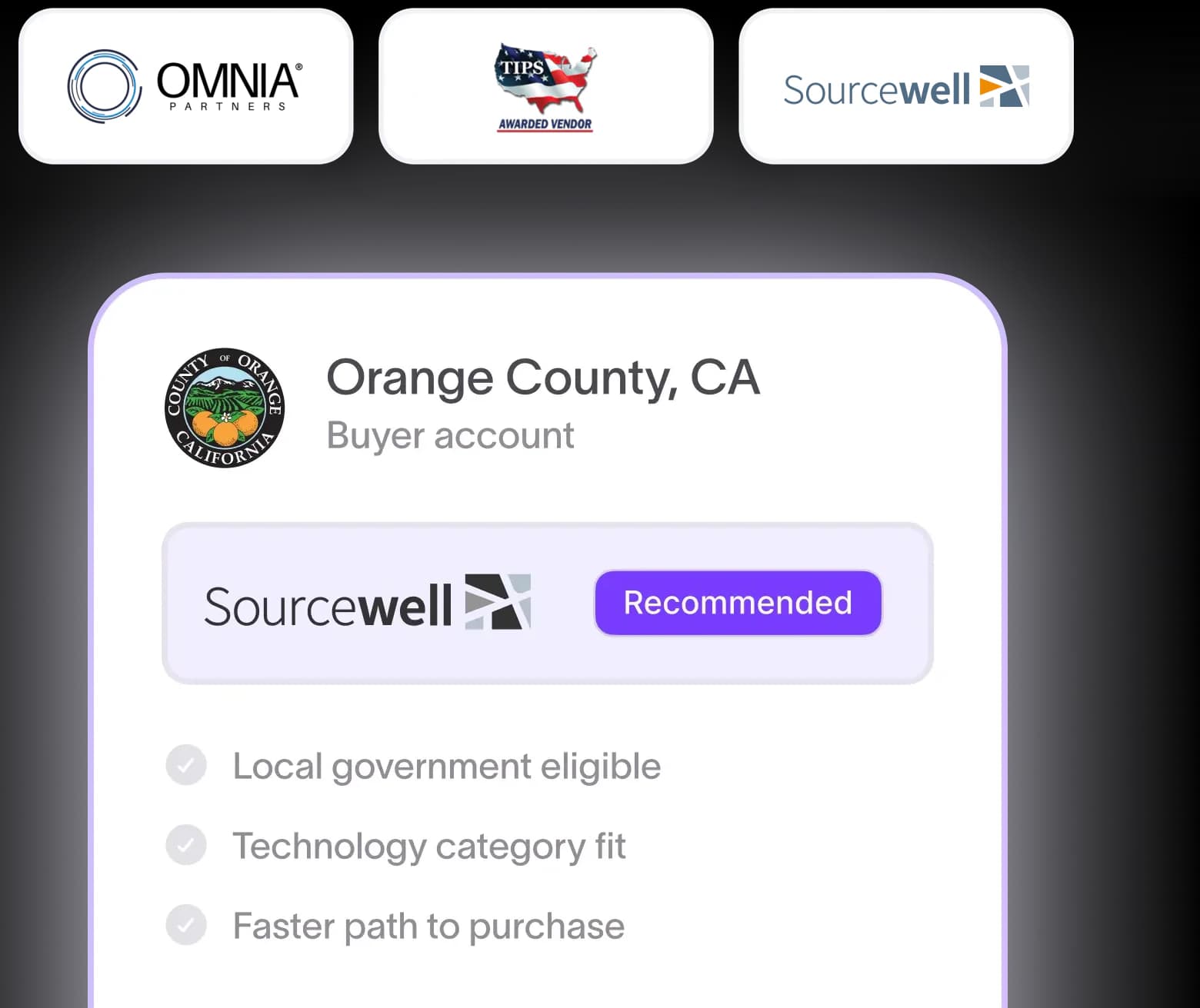
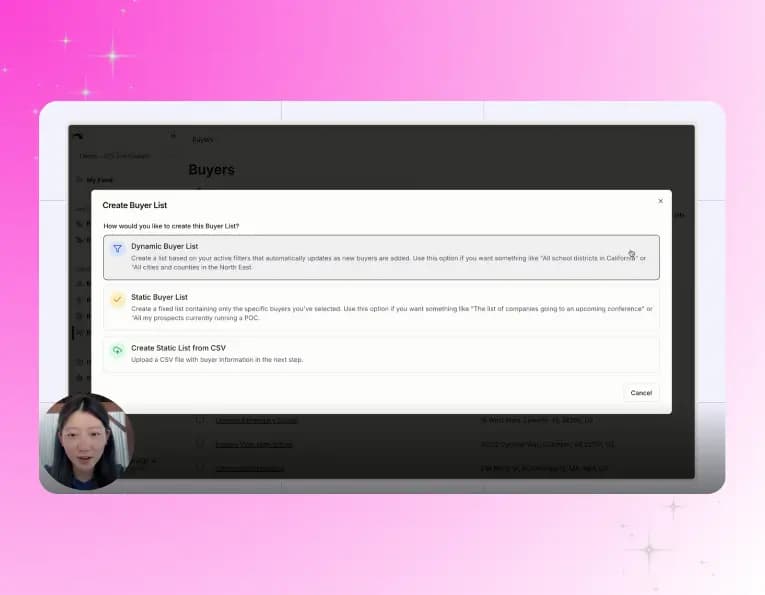
Starbridge shows each buyer’s sole-source limits and cooperative purchasing history, so reps can price for the right path from the first call. Book a demo today to learn more.
Shape the requirements without writing them
Between the first signal and the solicitation, the vendor’s job is to inform the requirements, not write them.
RFI responses, demos, pilots, and references all help a buyer understand what’s possible. Drafting specifications can disqualify a vendor, including under federal grant procurement rules. Once a solicitation is published, follow its communication rules, including restrictions such as Miami-Dade County’s Cone of Silence, and use authorized channels for questions.
Early engagement can shape the whole evaluation when it starts soon enough.
For InquirED, Starbridge flagged a district board discussion about forming a teacher committee, and its team reached out before the district had written its evaluation rubric. InquirED ended up designing the rubric.
Capture management without a dedicated capture manager
Most teams selling to local government, K–12, and higher education don’t have a dedicated capture manager. Instead, AEs, SDRs, and founders handle capture as part of their regular sales process, bringing in sales engineers or proposal leads for larger deals.
You don’t need a complex federal-style capture process. Three checkpoints are enough:
- Qualify the opportunity. Answer the four questions above to understand the buyer’s needs, decision-makers, competition, and purchasing process.
- Decide whether to pursue. Is the opportunity worth actively pursuing now, or should you keep monitoring the account?
- Make the bid/no-bid decision. When an RFP arrives, decide whether you have a realistic chance of winning before investing time in a proposal.
Track everything in a one-page capture plan in Salesforce or HubSpot, rather than a separate slide deck. Update it as new buying signals emerge so your team always knows where each opportunity stands.
For teams pursuing larger, more complex deals or managing a high volume of opportunities, a dedicated capture manager may eventually make sense.
| Field | What to capture |
|---|---|
| Account | Name, buyer type, and territory |
| Signal and date | The buying signal that opened the pursuit |
| Funding | Source and amount, such as a budget line or a grant |
| Decision-makers | End user, economic buyer, IT, procurement, and the board |
| Incumbent | Vendor, contract value, and expiration date |
| Procurement path | Threshold, cooperative vehicle, or full RFP |
| Competitors | Who else is likely to bid |
| Win themes | The buyer’s stated problems, in the buyer’s words |
| Risks | What could stall or kill the deal |
| PWin estimate | An honest estimate of the odds of winning |
| Next three actions | Each with an owner and a date |
Filling out that plan for every account requires account prioritization.
Without a scalable way to prioritize accounts, reps default to geography or gut feel. Prioritizing the right accounts starts with scoring the full TAM on buying-readiness indicators, such as competitor usage, contract expirations, and budget trends.
Firmographics like enrollment or population come last as supporting context, since they say little about timing on their own.
Starbridge’s Buyer Summary generates a cited account briefing on every buyer page in seconds, covering recent signals, the account’s initiatives, and its competitive landscape.
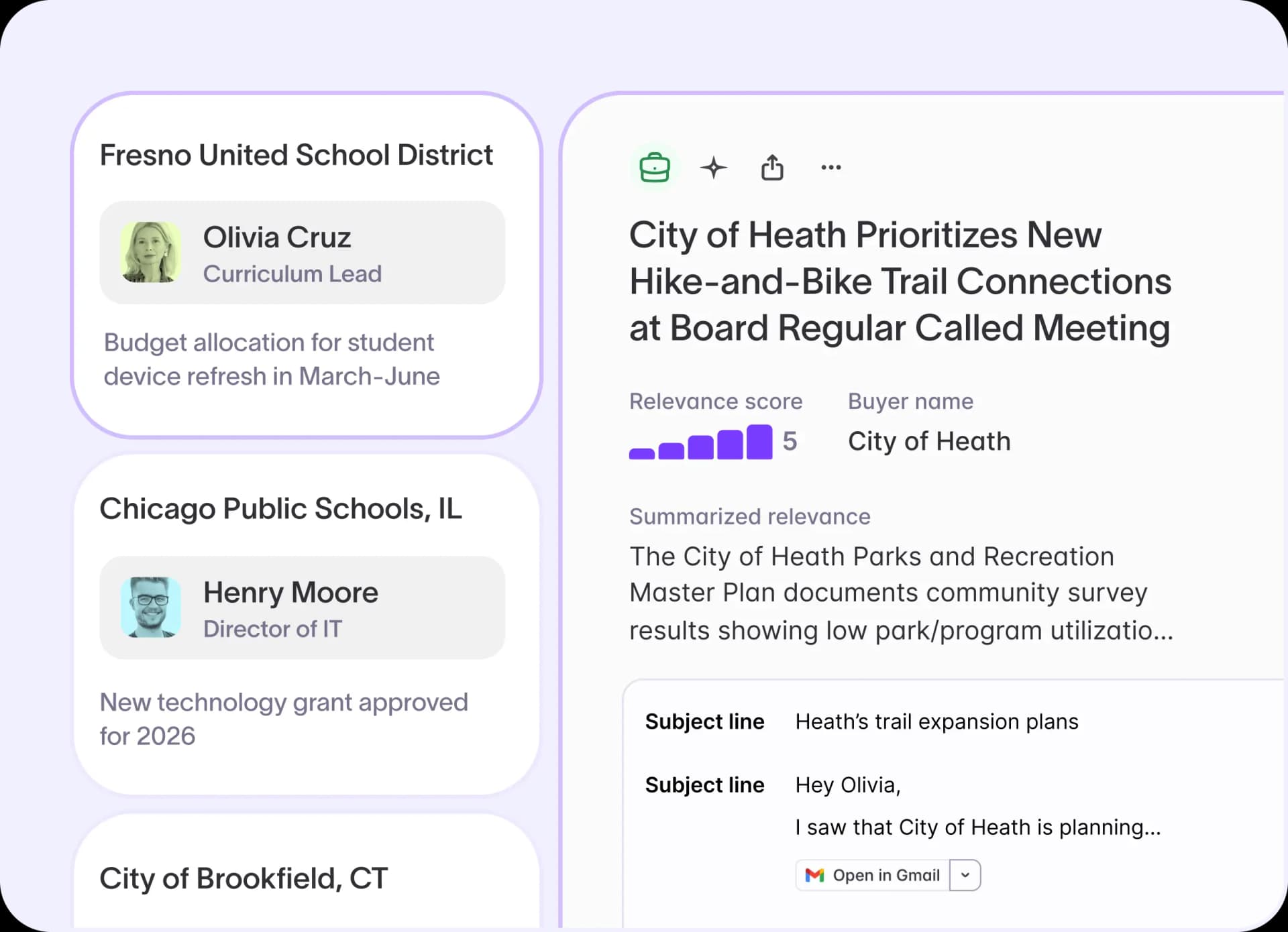
It can sync to a field on the account record through Starbridge’s native, bi-directional Salesforce and HubSpot integrations, which sync, clean, and enrich CRM records, so the capture plan starts half-filled.
Zencity shows what that looks like in practice. It sources 50% of its cold meetings from Starbridge, and its enterprise reps use Ask Starbridge to pull city priorities from recent council meetings in seconds. They walk into first discovery calls already knowing procurement pathways and past contracts.
The rep who gets there early has the advantage
Good capture starts before the RFP. By answering the four questions early, reps can focus on deals they have a realistic chance of winning, build relationships with buyers, and identify purchasing options that may not require a new RFP.
Board minutes and contract records provide the first clues, which reps can then confirm with the buyer.
To measure whether capture is working, track four metrics:
- Pipeline from buying signals: How much pipeline comes from opportunities identified early?
- RFPs identified in advance: How many RFPs did your team know about before publication?
- Win rates: How often do you win deals where you engaged the buyer before the RFP, compared with opportunities discovered afterward?
- Alternative purchasing paths: How many deals close through cooperative contracts or authorized small-purchase procedures?
Improving these numbers requires monitoring public records and acting on new information consistently. That’s what Starbridge was built for.
Starbridge is the AI GTM platform built on the most comprehensive dataset of government and education buyers and buying signals. It helps teams selling to local government, K–12, and higher education identify promising opportunities, prioritize accounts, and engage buyers before the competition.
Book a demo to see how Starbridge helps your team move from the first buying signal to a signed contract.
Frequently asked questions
Capture management is the work a vendor does before and during a solicitation to raise its odds of winning the contract. In federal contracting, capture can run for years with dedicated capture managers and color-team reviews. The goal is to understand the buyer’s need and the competition before the RFP is written.
Deals in local government, K–12, and higher education are smaller and faster, and they spread across 320k+ entities. Capture here is lighter account work inside the outbound motion, driven by buying signals like board discussions and contract expirations. State and local procurement rules govern these purchases, with additional requirements when federal grant funds are involved.
Capture should start at the first buying signal. A 12- to 18-month horizon for board discussions and strategic plans is a planning example, not a fixed rule. Contract expirations deserve attention 9 to 12 months ahead, while the incumbent is still in place. For buyers with a June 30 fiscal year end, check whether winter budget planning offers a useful outreach window.
A bid/no-bid decision is the call on whether a pursuit deserves proposal time. In government and education deals, that call rests on funded need, the decision-makers, and the incumbent contract, plus the buyer’s procurement path. An RFP that names a competitor deserves a closer review of whether equivalent solutions are allowed and whether your offer can meet the requirements.
Yes. AEs, SDRs, and founders can run capture inside outbound by scoring accounts on buying-readiness indicators and keeping a one-page capture plan in the CRM. Short account briefs on the incumbent contract and decision-makers keep each pursuit focused, and an AI GTM platform like Starbridge automates that research so capture fits into a normal selling week.